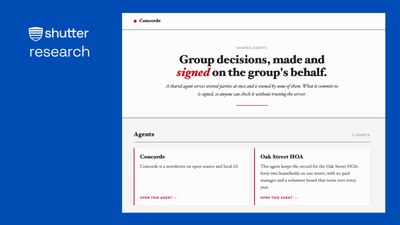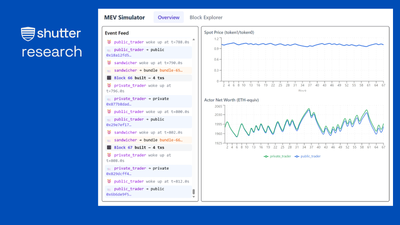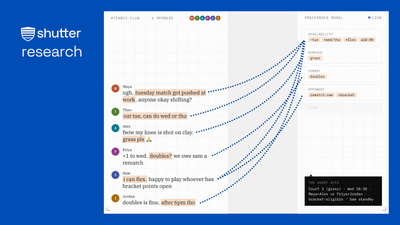

Two weeks ago we released the alpha version of Concorde, an open-source framework for giving an organization one shared agent that acts on behalf of the group.
Today we're introducing the Concorde Launcher. It creates a Concorde shared agent for your group in minutes, with its own record of everything the group decides and a web app your members can open from their phone.
It works for any group that has to decide things together, whether that's a team, a DAO, a club, a fund, or a homeowners association.
We're opening the launcher in an invite-only alpha to a small number of groups.
What is a Concorde Shared Agent?
In our previous post we described the problem groups face as the "coordination tax". It's all the work a group does to stay aligned that isn't the actual work. Collecting everyone's input, remembering who wanted what, chasing the open questions, writing up what was decided. None of it produces anything, and all of it has to happen. Worse, none of it sits in one place. Some is in a chat thread, some in a document nobody opens, most of it in the heads of whoever was there at the time.
A shared agent takes that on, and making it genuinely shared took three things.
The first is making sure no individual member controls the agent. Everyone has to use it on the same terms. That would fall apart if someone could access the agent directly, because direct access could let them change its instructions, edit its memory, or otherwise influence how it behaves. So at the center of Concorde sits the gateway, between the members and the agent. Members communicate through the gateway and never touch the agent directly. The gateway checks who's writing, delivers their messages, brings back the agent's replies, and records the exchange.
The second is a history that belongs to the group. Every interaction is kept, so the record isn't sitting somewhere one member can quietly rewrite, and it doesn't leave when they do.
The third is that its commitments can be checked. The agent signs what it puts its name to, and anyone can verify it afterwards without an account, which matters the moment a decision has to hold up to somebody outside the group.
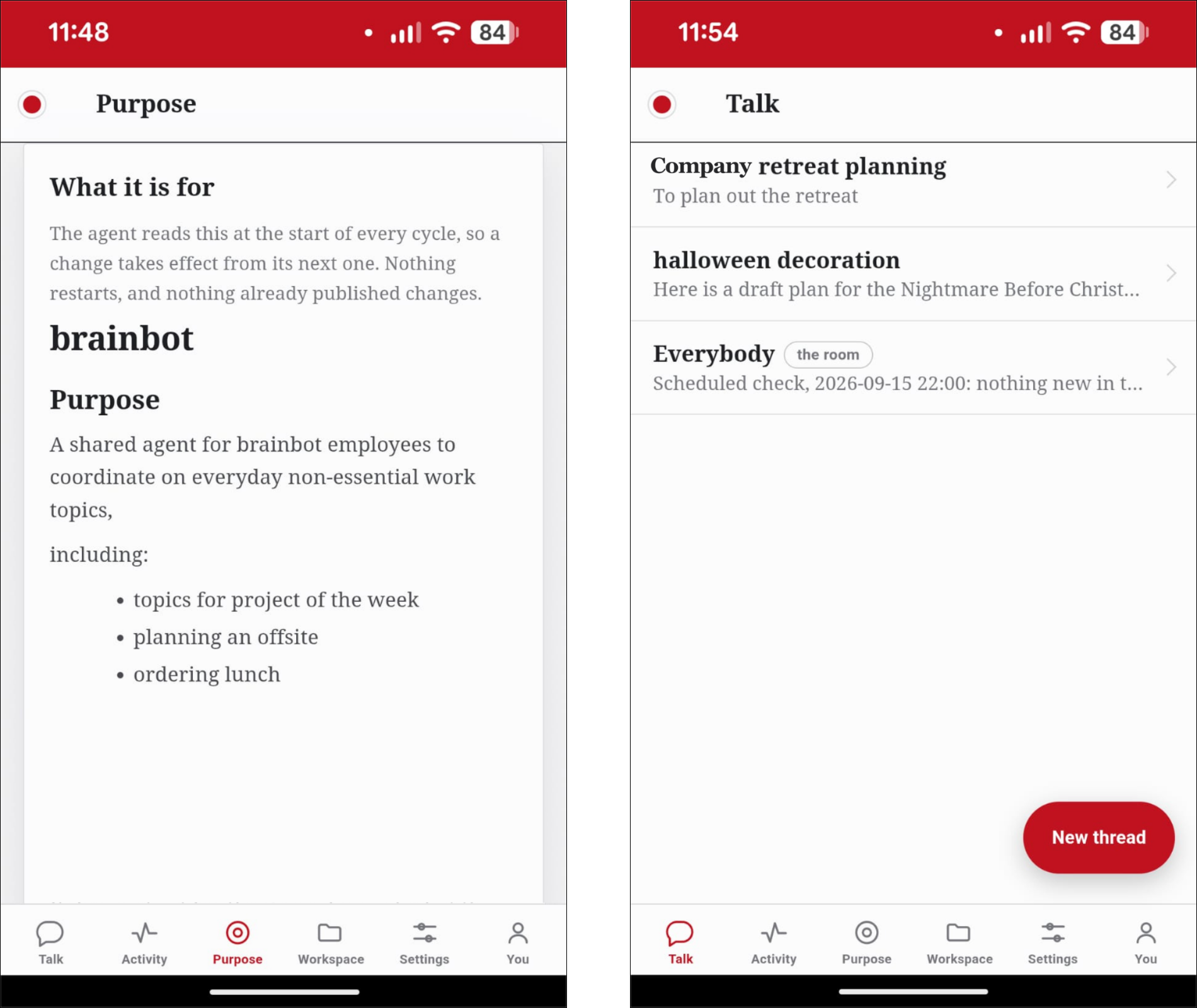
We've been running shared agents ourselves for a while. We created two mock shared agents for running a newsletter and a homeowners association. And we started handing over our company's non-essential tasks to a shared agent, like planning the next company offsite and sorting out team lunches.
We're not the only ones who think organizations need agents of their own. Stanford's OpenLab ran an Autonomous Organizations Summit in July on the question of when organizations can run themselves, and Andon Labs is deploying AI agents that run real businesses. Their focus is companies. Concorde is built for organizations in general, and companies are one kind among many.
Learn more about Concorde’s tech.
What your group gets with the Concorde Launcher
- An agent set up and running for your group, with a web app your members open from their phone. Nothing to install, nothing to maintain.
- In the web app, members open a thread for each subject the group is working on, message the agent privately, see what it has done and published, read the documents it keeps, and check that a decision is genuine.
- Admins get their own controls. Invite and remove members, set what the agent is for, and decide how often it works.
- It remembers what members ask for. Tell it you want more of one thing and less of another, and that holds until someone changes it. It also works on a schedule, not only when someone writes to it.
- Members who'd rather not use the web app can message the agent on Telegram, once an admin connects a bot. It answers wherever they wrote from.
- Other groups using Concorde can't see any of your group's history, and neither can anyone you haven't invited.
- Every decision is signed by your agent, so anyone can check it's real and hasn't been changed since.
- Every Concorde shared agent comes with a built-in agent, pi, that works on tasks autonomously. It can search the web and create and edit the documents it keeps for the group.
- If your group already runs an AI agent like OpenClaw or Claude Code, you can connect it to Concorde so it carries out what the group decided, using whatever tools and access you give it.
Request an invite
We're starting with a small number of groups, and invitations go out in batches. The alpha is early, and the groups in it will see the rough parts before anyone else, but they'll also help decide what Concorde becomes. If that sounds like a fair trade, we'd like to hear from you.
Tell us about your group. Who's in it, what you work on together, and where you think a Concorde shared agent could make a difference.
The framework is open source at github.com/shutter-network/concorde if you'd rather build your own.